lunes, 16 de septiembre de 2013

Why is Google’s Glass $1,500, while comparable devices are only $500?

Whether you think of Google’s face-computer, Glass, as the harbinger of the next wave of technology or not, it’s difficult to ignore the $1,500 price tag for such a seemingly limited device. Competing products with comparable hardware are significantly cheaper to the tune of $1,000. Why is Glass so expensive?
We’ve discussed the merits of the current version of Google’s Glass before, and a teardownearlier this month revealed that the hardware specs weren’t anything to say “Okay, Glass” and email home about. The current guttyworks feature a Texas Instruments OMAP4430 SoC, 16GB of internal flash memory, what seems to be 1GB of RAM, and an underwhelming 570mAh lithium-polymer battery. Basically, the Glass is around as powerful as a cheap modern smartphone.
Google Glass
It is often expected that, when a new genre of device is created, it won’t start off very powerful as it tries to find its footing. It’s also often expected that a new genre of device would be sold for more money than it initially seems worth, charging a premium for being the next great new thing. Before Google’s Glass has even released on any kind of consumer scale — with the Explorer beta program the only real way to get your hands on one — other competitors have emerged, charging significantly less money for a comparable device with comparable specs. That begs the question: What in the world makes Google’s Glass as expensive as, for example, a Retina 15-inch MacBook Pro, or nearly four PlayStation 4s?
To figure that out, you should compare Glass’ hardware to that of its competitors. Though the power of the Glass hardware won’t blow anyone’s smartsocks off, perhaps the quality of the the hardware is at least significantly higher than the competitors’? Recon Instruments recently announced the Jet, a face-computer in the same vein as Google’s Glass, except marketed and designed for a more energetic lifestyle. Unlike Glass, the Jet looks like real sunglasses (pictured above). Also unlike Glass, the Jet only costs $499, one-third the price. The Jet sports a 1GHz dual-core ARM Cortex-A9 processor, 1GB of RAM, an 8GB of on-board flash memory. It features 802.11a/b/g/n WiFi, Bluetooth 4.0, an accelerometer, gyroscope, and magnetometer, an HD camera, and speaker and microphone. Aside from the 8GB less of flash memory, the Jet is comparable to the Glass. If the devices had the same apps and were styled the same way, your grandma likely wouldn’t know the difference between the two. However, the Glass’ prism display (pictured below) might be the difference.
Google Glass display assembly
Even Apple, notorious for charging a premium for comparable hardware, doesn’t charge $1,000 over a competitor’s similar product. Why, then, is Google charging such a premium? There are answers that won’t induce any ire, and answers that won’t portray Google in a positive manner. The negative possibilities are simply that Google is leveraging its recognizable brand, and charging a huge premium because Glass is a genre of technology that looks like real-life science fiction. If that is the case, then Google is essentially disguising the capabilities of the Glass and preying on the public’s desire for science fiction technology.
A believable answer for the huge price difference that won’t make you mad at Google is that the aforementioned prism “screen” is just very, very expensive. Remember, Glass is essentially a projector that beams an image into your eye, whereas competitors like Jet appear to just use a tiny HD screen that is placed in such a way so as to appear like a large screen. A prism that refracts an image into your eyeball certainly sounds expensive, or at least more expensive than a cleverly placed but regular screen.
Finally, another answer that will likely be bothersome-but-understandable is that the current $1,500 price is just the entry fee for the early-access Explorer program. The final retail unit could be significantly cheaper, and Google is charging a high price for this beta program in order to attract serious testers only.
If Glass remains this expensive at its retail launch, though, Google might have some serious justification ahead of itself.

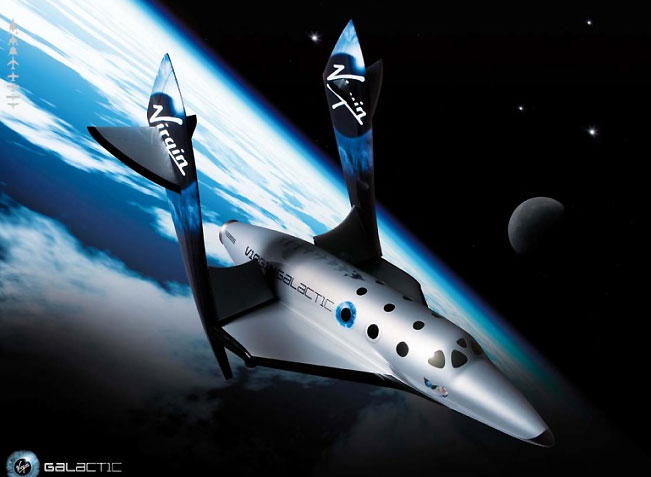
Golden Spike Moon Mission: Private Company Offers Tourists $1.5 Billion Ticket To History

A new private space company has announced an ambitious plan to send tourists to Moon by 2020.
Golden Spike, named after the final bolt hammered into the First Transcontinental Railroad, will sell each two-person mission for $1.5 billion.
Former Nasa science mission director Alan Stern will serve as CEO, and his advisers will include Nasa shuttle program manager Wayne Hale and Homer Hickam, a former Nasa engineer.
They made the announcement on the 40th anniversary of the lift-off of Apollo 17, the last manned mission to the Moon.
"We could not be able to do this without the many breakthroughs NASA made in inventing Apollo, the Shuttle, the International Space Station, and its recent efforts to foster commercial spaceflight," said Golden Spike Board chairman Gerry Griffin.
The aim is to use existing technology and rockets to power the missions, in order to keep costs down. Each trip will involve four launches - two for its lunar lander, two more to send up crew and cargo.
Golden Spike said its plan has been in the works for more than two years, but admitted many questions remain unanswered.
So far it has not said how it will fund its own work up to the first flights, and hasn't even finalised what rockets it will use to get people to Earth's satellite.
But Golden Spike said it had already begun studies with various companies for the design of its lunar lander, lunar space suits, and lunar surface experiment.
"We're not just about America going back to the Moon; we're about American industry and American entrepreneurial spirit leading the rest of the world to an exciting era of human lunar exploration," Stern said.
Stern told Space.com that his company was "state-of-the-art cool", and said there would be a long line of governments, companies and individuals willing to pay the price.

GTA 5 News

This page collects comfirmed and unconfirmed -- but plausible -- GTA 5 rumors, along with appropriate sources for each.
Map Leaked for GTA 5 
Not actual map from GTA 5. May be Heist related. 
The GTA 5 map has been faked repeatedly, but a recent leak claims to show a map that's nearly identical to well-researched fan maps and has been identified widely as the actual GTA 5 map.
There was recently a map made by fans. Of course this map was near to the actual map above before the real map was shown by rockstar games.
There is also a YouTube video which was also made by fans and shows how this map was put together.


How big is the map in GTA 5? Well, let's just say it's ridiculously big - like, bigger than all of Rockstar's previous games combined big.
But that's not enough for some Reddit users, who are clearly anxiously awaiting the arrival of their copies with feverish anticipation.
So now one such user has made a comparison map to show how big Los Santos is compared to real-world cities.
Now clearly it's not really a fair comparison - GTA shrinks down the space between places, buildings, city blocks and more to fit in more of what matters - space to run, drive and shoot things like a maniac. But it's still an interesting view of just how massive the world is: we can now compare GTA to real cities. That's not bad.
reddit
The multiplayer of GTA 5 will support up to 32 users at once and have a two-player cooperative mode according to a new rumor. The speculation comes from data found in the archives of the Xbox 360 version of Rockstar sandbox. This information refers to different modes and details of GTA Online, the online mode.

The multiplayer GTA 5 may have the following modes, all of them endure up to 32 users at a time: free mode, deathmatch, race and police against thieves. Also, GTA Online could have a two-player cooperative mode Is it the story mode or multiplayer cooperative activities like Saints Row?

GTA 5 is already on sale, but its multiplayer mode, GTA Online, will not leave until October 1 Want to know what adventures in store after you finish the story of Michael, Franklin and Trevor?

viernes, 13 de septiembre de 2013

Alice (Programa)

¿Que es Alice (programa)?

Alice es lenguaje de programación educativo libre y abierto orientado a objetos con un entorno de desarrollo integrado (IDE). Está programado en Java. Utiliza un entorno sencillo basado en «arrastrar y soltar» para crear animaciones mediante modelos 3D.
El programa se desarrolló prioritaria mente para solucionar problemas de software educativo. 

Historia

Este software fue desarrollado por los investigadores de la Universidad Carnegie Mellon, entre los que destaca Randy PauschAlice es lenguaje de programación educativo libre y abierto orientado a objetos con un entorno de desarrollo integrado (IDE). Está programado en Java. Utiliza un entorno sencillo basado en «arrastrar y soltar» para crear animaciones mediante modelos 3D. Este software fue desarrollado por los investigadores de la Universidad Carnegie Mellon, entre los que destaca Randy Pausch.


 ¿Cual es su importancia?


El proyecto Alice es una iniciativa de varias universidades encabezado por la Universidad de Carnegie Mellon, en la que existe un Alice Team, conformado por profesores, personal y estudiantes.

Alice se define como un entorno innovador de programación 3D que hace que sea fácil crear una animación para contar una historia, crear un juego interactivo, o un video para compartir en la web. Hasta aquí se podría decir que suena divertido y pareciera no tener relación con la programación como se ha conocido tradicionalmente. Este es el primer punto a favor, precisamente, pues resulta atractivo para los estudiantes, y los impulsa, a través de su curiosidad, a conocerlo, pero sobre todo, a usarlo.

Alice es una herramienta de enseñanza de libre disposición, es decir, es gratuita y disponible en el Internet para todo el mundo con mínimos requisitos de hardware y software, capaz de ser ejecutada en cualquier sistema operativo.

Esta herramienta ha sido diseñada para ser la primera exposición de un estudiante de programación orientada a objetos. Aunque no es el objetivo de este artículo, dicho estilo de programación en uno de los de más influencia en la actualidad, aunque no el único, que se apega más al funcionamiento del mundo real como lo conocemos, por lo que facilita la programación de soluciones a problemas de cualquier tipo.

Alice es para cualquiera que le interese la computación, diseñar y crear animaciones en 3D.